
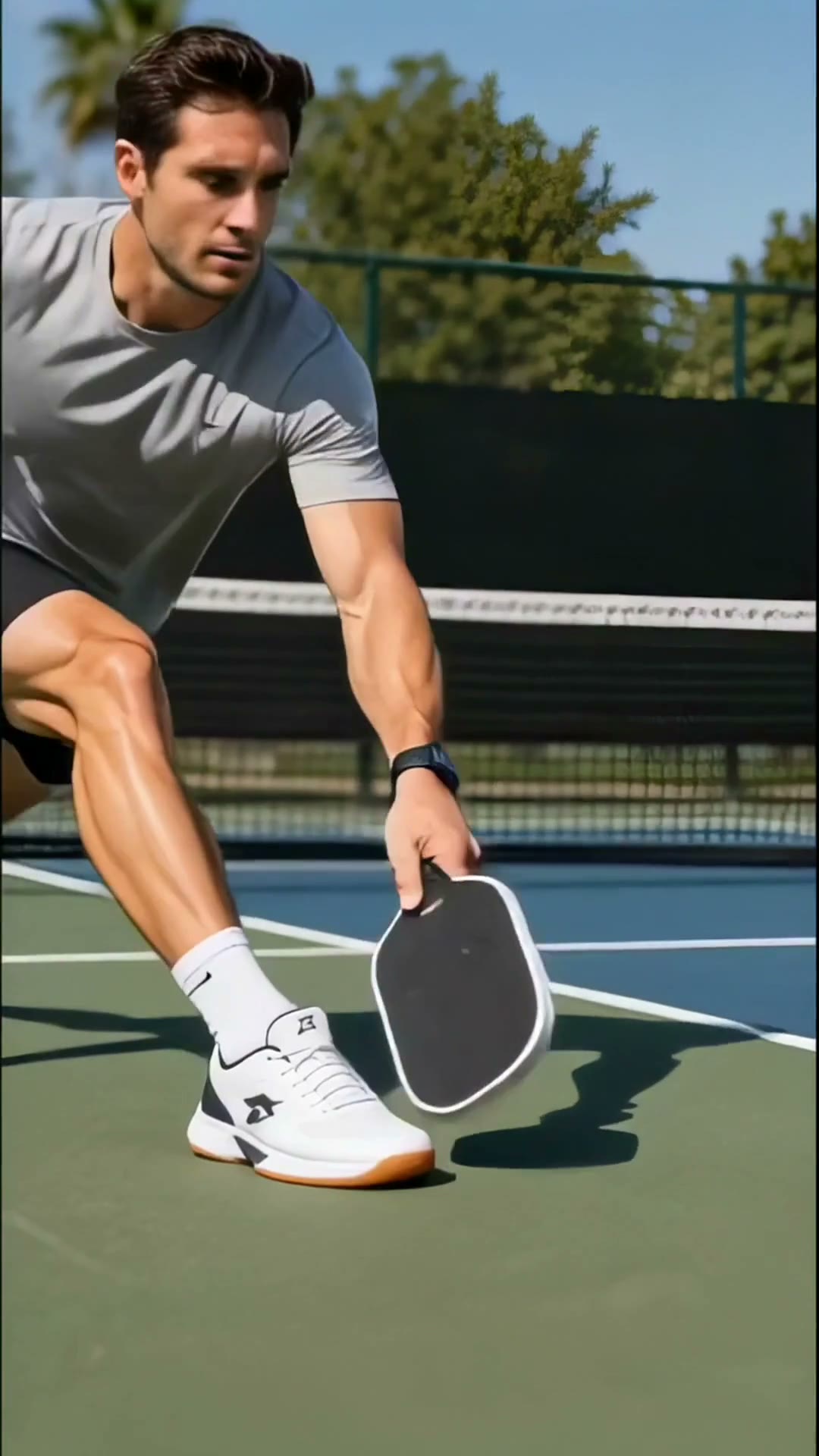
Most people come to pickleball from somewhere else, and they arrive in running shoes. That works until the first time you push hard off the outside edge of your foot to cover a dink at the kitchen line. Running shoes are engineered for one direction, forward, with a soft heel and a sole built to roll through a stride. Pickleball almost never asks you to go forward. It asks you to go sideways, stop, and change your mind.
Affiliate link. I earn a commission if you buy through it, at no extra cost to you.
Why It’s Worth It
A court shoe is built around lateral support. The upper holds your foot over the sole instead of letting it slide toward the edge, and the outsole is flatter and wider so that when you plant, you actually stop. The difference is most obvious in the split second after you stop, when a running shoe is still settling and a court shoe has already let you push off again.
There is also the matter of the surface. Pickleball courts chew through soft foam soles designed for road running, and a shoe that felt fine on pavement can wear through at the toe drag in a season. Court outsoles use harder compound in the places the game actually grinds.
What You Get
- Lateral support built for side-to-side movement rather than forward stride
- A flatter, wider outsole for planting and changing direction
- Non-marking sole, which most indoor courts require
- Toe reinforcement where drag wears shoes through first
What I’d Tell You Honestly
- They are stiffer than running shoes, and that is the point. If you are coming from a cushioned trainer, the first session will feel firm underfoot. That firmness is what stops your ankle rolling when you plant. It is not a break-in problem so much as a different tool.
- Check the width before anything else. Court shoes tend to run narrow through the midfoot because holding the foot in place is the whole design brief. If you have a wide foot, size and width matter more here than in a running shoe.
- They are not walking shoes. Flat, firm and supportive on a court translates to unremarkable on a long walk. Do not buy one pair to do both jobs.
- Outdoor play wears them faster. Asphalt and concrete courts are harder on an outsole than a gym floor, whatever the shoe. If you play outdoors mostly, expect to replace them sooner than the box suggests.
- This is a men’s shoe. Wilson lists it that way, so if you are buying for a woman, look at the women’s court line rather than sizing down, because the last shape differs and fit is the entire reason to buy a court shoe.
Frequently Asked Questions
Can I just use tennis shoes?
Yes, and many people do. Tennis and pickleball share the lateral demands, so a tennis court shoe is a reasonable substitute. Running shoes are the ones that genuinely do not transfer.
Do I need non-marking soles?
For indoor courts, almost always yes, and venues do enforce it. Outdoors it does not matter, but a non-marking sole costs you nothing there.
How do I know when to replace them?
Watch the outsole at the toe and the outside edge of the forefoot. When the tread there is smooth, the shoe has stopped doing the job you bought it for, even if the upper looks fine.
Disclosure: the link below is an affiliate link and I earn a commission if you buy through it, at no additional cost to you.
Shop the Wilson Pickle Pro Pickleball Shoes →
As an Amazon Associate I earn from qualifying purchases.
Leave a Reply